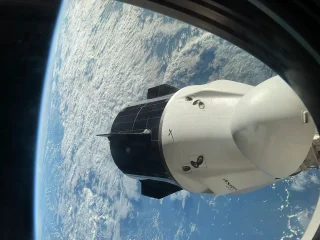
Humanity Returns to the Moon: Artemis II Updates, Rosemary Coogan’s Journey, and How Students Can Join the Adventure Through Moon Camp
Published
Humanity is getting ready to take another big step toward the Moon, and Europe is firmly part of that story.
As NASA prepares for the Artemis II mission, European Space Agency (ESA) astronaut Rosemary Coogan continues her journey toward space, and thousands of students across Europe are invited to design their own off‑world habitats through Moon Camp.
Here’s how all three threads come together in a moment of renewed excitement for lunar exploration.
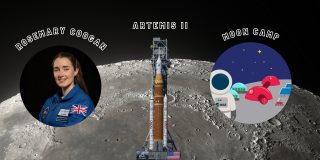
Artemis II: A Mission Worth Waiting For
NASA’s Artemis II mission, the first crewed trip around the Moon in more than 50 years, has hit a few bumps on the road to launch, but progress continues. During a full ‘wet dress rehearsal’, engineers identified a persistent liquid hydrogen leak, along with some audio communication dropouts and weather-related delays. Because of those issues, NASA has now shifted the earliest launch window to March 2026.
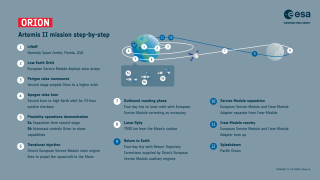
Even with the delay, excitement remains high. The mission will see astronauts Reid Wiseman (NASA), Christina Koch (NASA), Victor Glover (NASA), and Jeremy Hansen (CSA – Canadian Space Agency) fly a 10‑day loop around the Moon to test spacecraft systems that are critical for future lunar landings. Although Artemis II won’t touch down on the Moon’s surface, it sets the stage for Artemis III, and ultimately for a sustained human presence on the Moon. This is very much a global story beyond Europe, the United States and Canada, as countries such as China (who are planning a crewed lunar landing by 2030) and emerging players like the UAE, Japan, and India are also advocating ambitious plans to send their own astronauts or missions toward the moon in the coming decades.
Rosemary Coogan: A New European Voice in Space Exploration
Among the next generation of European explorers is Dr. Rosemary Coogan, an ESA astronaut candidate originally from Belfast. She brings an inspiring mix of scientific expertise and down‑to‑earth enthusiasm for space. Coogan holds master’s degrees in physics and astronomy from Durham University, as well as a PhD in astronomy from the University of Sussex. She has applied the knowledge she has gained to research at top institutions such as the Max Planck Institute for Extraterrestrial Physics in Germany and CNES (the French Space Agency).
Her astronaut training has already taken her through winter survival exercises in the Pyrenees, spacewalk practice underwater in NASA’s Neutral Buoyancy Laboratory, centrifuge and microgravity flights, and international systems training aboard replica ISS modules. She speaks openly about how the immensity of space captured her imagination as a child, and she continues to inspire young people today by sharing her journey at events across Ireland. Her first mission is expected to be to the ISS by 2030, but like many in ESA’s new astronaut class, she may well play a role in Europe’s contribution to future lunar missions!
Moon Camp: Where Students Become Space Designers
Meanwhile, the next wave of future scientists, engineers, and astronauts may already be getting their start through Moon Camp. ESA’s hands‑on imaginative education challenge invites young people up to 19 years old to design their own space habitat, whether on the Moon, Mars, or another planet or moon in the Solar System. Projects can take almost any form, from hand-built models to VR worlds, robotics or scientific experiments. Submissions close the 27th of July 2026, and every team receives an ESA participation certificate.
Moon Camp is designed to be flexible for teachers and educators, with classroom‑ready resources and inspiration from real ESA experts and astronauts. It is run in partnership with ESERO offices across Europe and the Airbus Foundation to help students build creativity, teamwork, and problem‑solving skills, while imagining what life could look like beyond Earth.

Looking Ahead
With Artemis II preparing for launch, astronauts like Rosemary Coogan moving closer to their first missions, and Moon Camp inviting students to dream up the future of living in space, Europe is playing an active and inspiring role in this new era of lunar exploration.